
Shared fences can be a tricky subject legally, financially, and even socially. If a fence sits between your property and your neighbor’s, who decides when it gets painted, and is it okay for someone to make changes without asking first?
What Is a “Shared Fence”?
A shared fence is one that sits directly on the property line, giving both homeowners equal ownership and responsibility. If you’re unsure whether your fence qualifies, you can look at your survey, plat map, or local zoning documents. Most HOAs also define whether dividing fences are considered community-shared structures or private ones. Understanding this detail is important because it determines how decisions like painting should be handled.
Permission is Key
In most cases, neither homeowner should paint a shared fence without the other’s permission. Even if you see only your side of the fence, the structure still belongs to both of you if it sits on the property line. Choosing a color, stain, or finish unilaterally can cause frustration or even financial disputes later on. If the new finish causes damage or if your neighbor simply dislikes the look, you may be expected to restore or replace it.
Because a shared fence affects curb appeal for both homes, the most successful approach is collaborative. Talk through your ideas with your neighbor before you begin, especially if you’re thinking about a significant color change. Many homeowners find that once expectations are clear, it’s easy to agree on a plan.
Why Painting a Shared Fence Matters
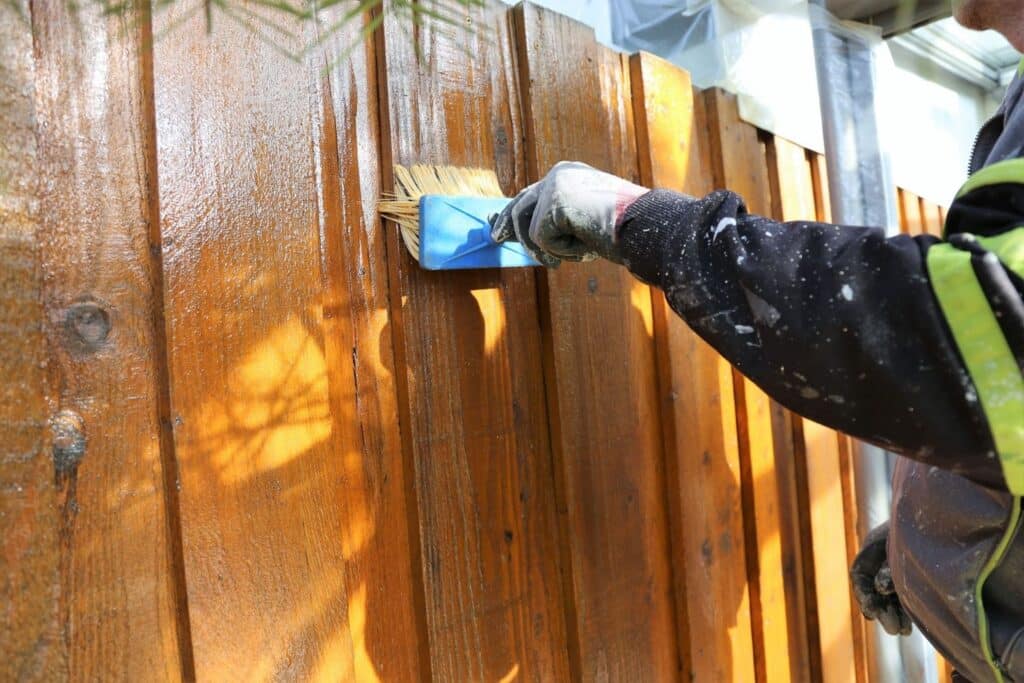
A fence might seem like a small detail, but it plays a bigger role than most people realize. Its condition and appearance influence the overall look of both properties, affect resale perception, and determine how well the wood holds up over time. Paint and stain also behave differently in Colorado’s climate, where sun exposure and weather patterns can fade or damage finishes quickly. This is one reason many people choose staining instead of paint, it protects the wood while allowing it to breathe.
If you’re considering a refresh, you can learn more about protective finishes through our deck and fence staining services.
What If Your Neighbor Already Painted Without Asking?
Start with a conversation. Misunderstandings happen, and many homeowners simply don’t realize they need permission. Before things escalate, confirm the exact property line and discuss your concerns calmly. If the color, material, or method used causes damage or violates HOA guidelines, you may be able to work together on a solution. Most situations resolve far more easily through neighbor-to-neighbor communication than through formal disputes.
When to Consider Calling a Professional
If the fence needs repair, prep work, or full refinishing, a professional painter can ensure the job is done evenly and that the wood is properly protected. Professionals also use stains and sealants suited to Colorado weather, helping the fence last longer and resist fading or moisture damage. Expert application makes a noticeable difference.
The Bottom Line
If you’re wondering who can paint a shared fence, the answer comes down to one simple principle: shared fences require shared decisions. Mutual agreement protects both property lines and neighbor relationships, and it ensures the fence looks intentional rather than pieced together.
And when you’re ready to give that fence a fresh, durable finish, the Legacy Painting team is here to help make the process smooth and neighbor-approved. Contact us today!